10
1
10
download/literature/watchtower/1907-1.pdf
watchtower/1907/1/1907-1-1
VOL.
XXVIII
ALLEGHENY,
PA.,
JANUARY
1,
1907
1907-0UR
YEAR
TEXT-1907
No.1
Our
book
of
"Daily
Heavenly
Manna"
is
evidently
being
greatly
used
of
the
Lord
for
the
blessing
of
the
household
of
faith.
The
bringing
thus
of
a
morsel
of
meat
from
the
store
house
of
truth,
with
a
comment
upon
it,
at
the
beginning
of
each
day,
is
evidently
tending
toward
the
strengthening
of
the
new
nature,
the
new
mind,
by
continually
directin~
it
in
the
ways
marked
out
in
the
Lord
's
Word.
Additionally
our
year-texts
are
helpful,
as
tending
to
remind
us
along
the
lines
of
onr
general
duty,
as
the
daily
texts
refresh
us
and
strengthen
us
along
particular
lines.
We
have
had
this
in
mind
in
the
choosing
of
this
text,
and
believe
it
to
be
one
the
frequent
consideration
of
which
will
be
profitable-llnd
the
value
of
all
these
spiritual
refreshments
is
enhanced
by
the
realization
that
the
minds,
the
hearts,
of
the
Lord's
people
everywhere
are
being
similarly
stirred
and
refreshed
along
the
same
lines.
As
announced
in
a
previous
issue
we
have
this
year's
texts
in
large
supply,
very
elegantly
gotten
up
and
at
a
trifling
cost,
so
that
none
need
do
without
them-none
need
be
deprived
of
this
help
and
encouragement.
Desiring
that
every
reader
of
this
journal
should
have
the
comfort
and
profit
of
this
means
of
grace-this
assistance
in
the
narrow
way-we
have
made
the
prices
extremely
low,
simply
to
cover
cost,
but
additionally
now
propose
that
if
there
be
any
of
you
who
cannot
afford
to
purchase
we
will
take
pleasure
in
supplying
you
without
charge:
that
thus
we
may
assist
in
washing
the
feet
of
the
Lord's
disciples-assist
in
cleansing
them
from
earthly
de
filements
and
thus
in
preparing
them
for
the
heavenly
courts.
TO
WHOM
IS
OUR
TEXT
APPLICABLE
The
Apostle
does
not
address
the
world,
however
morally
well
disposed
they
may
be.
N
one
has
an
interest
in
the
things
above
unless
first
of
all
he
has
heard
of
Jesus
as
the
Redeemer,
renounced
sin
and
fled
to
the
Savior
for
refuge-justification.
He
must
have
gone
even
further
than
this
to
have
an
interest
in
the
things
above:
he
must
have
consecrated
his
justified
life,
presenting
it
a
living
sacrifice
to
the
Lord
(Rom.
12:
1),
and
been
accepted
of
the
Lord
and
been
begotten
again
of
the
holy
Spirit,
and
thus
have
started
his
experiences
as
a
spirit
being-a
"new
creature"
in
Christ
Jesus.
It
is
well
for
us
to
have
continually
in
mind
the
sharp
distinction
which
the
Scriptures
draw
as
between
the
natural
man
and
the
new
creature.
The
natural
man,
however
well
disposed,
is
of
the
earth
earthy.
This
does
not
signify
that
he
must
be
sensual,
degraded,
devilish;
for,
on
the
contrary,
some
natural
men
have
very
fine
characters
indeed,
considering
that
they
are
sharers
with
all
of
mankind
in
the
degradation
of
the
fall.
Adam
thus
was
a
natural
man
in
his
perfection,
in
the
image
of
God.
He
could
not
set
his
affections
on
things
above,
for
he
had
no
revelation
respecting
them,
no
hopes
or
prospects
centered
there.
His
interests,
in
harmony
with
his
nature,
were
earthly.
So
it
will
be
also
in
the
future
age.
While
mankind
under
the
blessings
of
restitution
will
be
re
stored
to
the
full
perfection
of
human
nature
lost
through
Adam,
redeemed
by
the
precious
blood
of
Christ
(Acts
3:
19
21),
although
they
will
he
reverencing
the
heavenly
laws,
mes
sages,
authorities,
they
will,
properly
enough,
be
giving
their
thought
and
attention
largely
to
earthly
things-appreciating
especially
the
restitution
blessings,
privileges,
opportunities
that
will
then
be
afforded
them.
THE
CHRISTIAN'S
CONFLICT
It
is
because
the
Lord
has
called
us
out
of
the
world
to
constitute
the
new
creation,
his
"body,"
his
"Bride,"
to
share
with
him
his
spiritual,
heavenly
glories
and
honors,
therefore
we
should
ever
keep
this
in
mind
and
strive
for
these
things,
for
"even
hereunto
were
ye
called.
"-1
Pet.
2:
21.
Called
to
"glory,
honor
and
immortality,"
it
remains
for
us
to
make
this
oolling
and
election
sure.
(Rom.
2:
7;
2
Pet.
1
:
10)
.
Again
he
reminds
us,
"Let
us
f
ear
lest
a
promise
having
been
left
us
of
entering
into
his
rest
[the
heavenly
rest]
any
of
you
should
seem
to
come
short
of
it.
"-Heb.
4:
1.
The
Apostle
forewarns
us
that
we
must
not
forget
that,
although
we
are
reckoned
by
the
Lord
and
by
ourselves
and
by
the
brethren
as
dead
according
to
the
flesh
and
alive
ac
cording
to
the
spirit,
nevertheless
we
have
this
treasure
of
the
new
life
in
the
earthen
vessel,
which
is
only
reckoned
dead,
but
which
really
is
very
much
alive
and
constitutrs
our
chief
enemy.
Not
that
we
have
two
wills
and
are
thus
double
minded
(Jas.
1:8).
Thank
God,
No!
We
have
only
the
one
will,
and
it
is
fully
devoted
to
the
Lord
according
to
the
terms
of
its
consecration.
But
this
one
new
will
can
not
have
its
new
body
until
it
proves
itself
worthy
of
it,
and
then
will
gain
it
as
a
reward
in
the
resurrection.
Meantime
the
con
flict
is
on
between
the
nrw
"ill
(which
has
no
body
of
its
own
kind)
and
the
old
flesh
(which
has
no
will
of
its
own
kind).
In
order
to
be
a
conqurror
the
new
will
must
struggle
with
the
old
flesh,
and
by
the
Lord's
assistance
keep
it
under,
in
subjection
until
the
end
of
the
course,
until
literally
dead.
The
Apostle
assures
us
that
in
proportion
as
the
new
mind,
the
new
creature,
grows
on
the
spiritual
food,
the
promises
of
the
Lord's
Word-in
proportion
as
it
affiliates
with
other
new
creatures
and
is
thus
strengthened
and
sustained
by
the
holy
spirit
granted
to
all
such,
it
grows
stronger
and
stronger
for
its
conflict
with
the
world
and
the
flesh
and
the
adversary.
It
cannot
hope
to
conquer
the
adversary
nor
the
world,
even
though
it
may
resist
them;
but
it
is
encouraged
to
hope
for
victory
in
its
combat
with
the
flesh.
The
Apostle's
assurance
along
this
line
is
that
"If
the
spirit
of
him
that
raised
up
Jesus
from
the
dead
dwell
in
you,
he
that
raised
up
Christ
from
the
dead
shall
also
quicken
your
mortal
hodies
by
his
spirit
that
dwelleth
in
you."
(Rom.
8:11).
If
the
power
of
God
was
sufficient
to
quicken
and
energize
the
dead
body
of
Jesus,
surely
he
is
able
as
well
as
willing
to
make
it
suffi
cient
for
us~o
give
us
the
victory
over
our
flesh
to
the
extent
that
sin
need
not
reign
in
(dominate)
our
mortal
bodies,
but
instead
we,
as
new
creatures,
will
be
able
to
use
them
more
and
more
efficiently
in
the
service
of
our
Lord,
to
whom
we
have
pledged
our
all.
WHY
SET
OUR
AFFECTIONS
ABOVE?
Since
the
new
mind
(the
will)
has
no
way
of
expressing
itself
except
through
the
mortal
body,
and
since
the
latter
is
prone
to
sin
through
inherited
weaknesses,
the
new
mind
has
a
difficult
task
before
it
to
rise
from
the
grovelling
things
of
sin
and
the
sordidly
selfish
conditions
surrounding
everything
at
the
present
time
to
the
grand
heights
of
perfect
love
and
unselfishness
inculcated
by
the
spirit
of
the
Lord,
by
which
we
have
been
begotten.
Realizing
that
the
tendency
of
the
fallen
flesh
is
continually
downward,
the
new
creature
is
[3913]
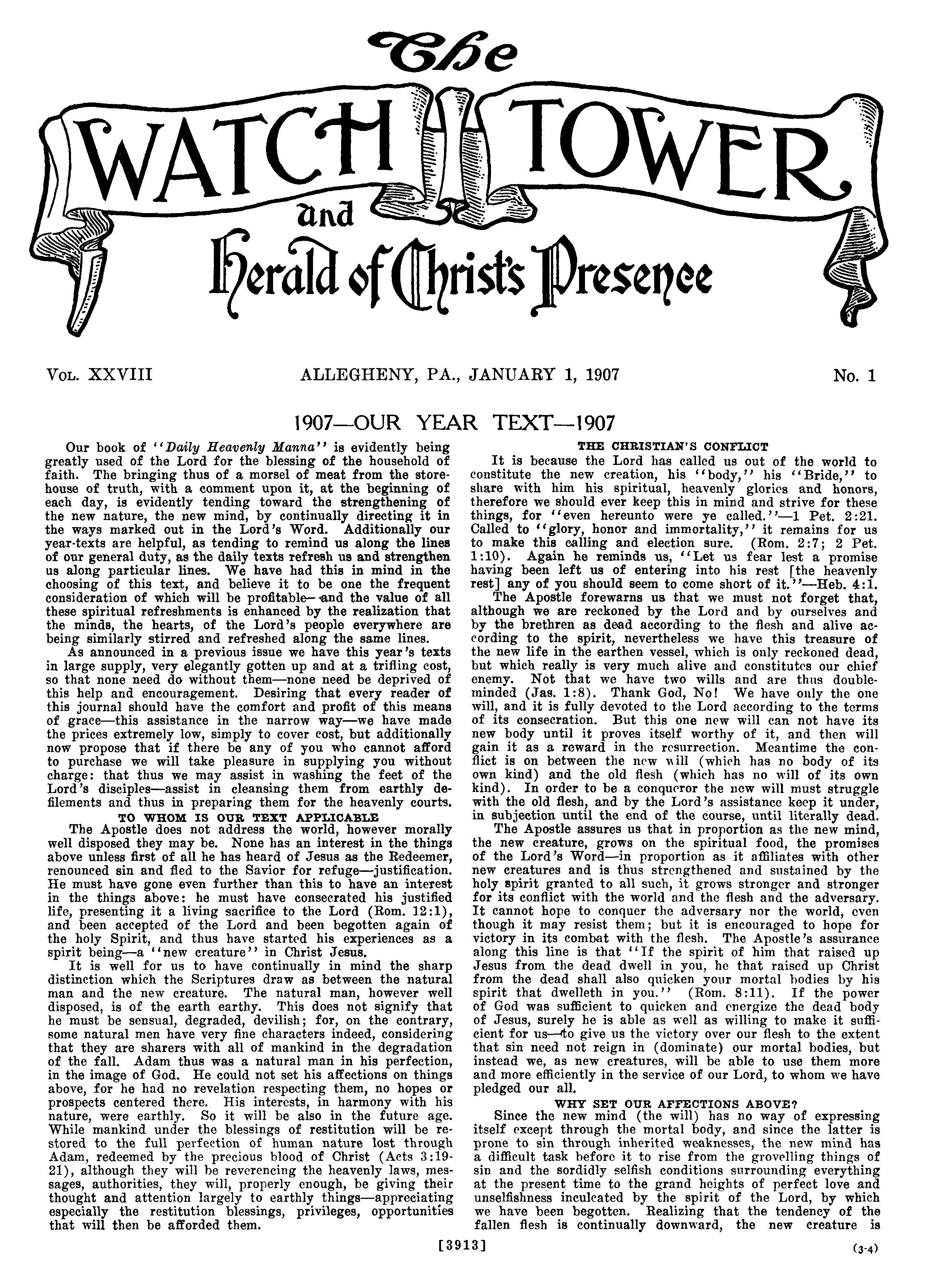
Vou. XXVIII eral of (hr a Presence ALLEGHENY, PA., JANUARY 1, 1907 1907—OUR YEAR TEXT—1907 Our book of ‘‘ Daily Heavenly Manna’’ is evidently being greatly used of the Lord for the blessing of the household of faith. The bringing thus of a morsel of meat from the storehouse of truth, with a comment upon it, at the beginning of each day, is evidently tending toward the strengthening of the new nature, the new mind, by continually directing it in the ways marked out in the Lord’s Word. Additionally our year-texts are helpful, as tending to remind us along the lines of our general duty, as the daily texts refresh us and strengthen us along particular lines. We have had this in mind in the choosing of this text, and believe it to be one the frequent consideration of which will be profitable—-and the value of all these spiritual refreshments is enhanced by the realization that the minds, the hearts, of the Lord’s people everywhere are being similarly stirred and refreshed along the same lines. As announced in a previous issue we have this year’s texts in large supply, very elegantly gotten up and at a trifling cost, so that none need do without them—none need be deprived of this help and encouragement. Desiring that every reader of this journal should have the comfort and profit of this means of grace—this assistance in the narrow way—we have made the prices extremely low, simply to cover cost, but additionally now propose that if there be any of you who cannot afford to purchase we will take pleasure in supplying you without charge: that thus we may assist in washing the feet of the Lord’s disciples—assist in cleansing them from earthly defilements and thus in preparing them for the heavenly courts. TO WHOM IS OUR TEXT APPLICABLE The Apostle does not address the world, however morally well disposed they may be. None has an interest in the things above unless first of all he has heard of Jesus as the Redeemer, renounced sin and fled to the Savior for refuge—justification. He must have gone even further than this to have an interest in the things above: he must have consecrated his justified life, presenting it a living sacrifice to the Lord (Rom. 12:1), and been accepted of the Lord and been begotten again of the holy Spirit, and thus have started his experiences as a spirit being—a ‘‘new creature’’ in Christ Jesus, It is well for us to have continually in mind the sharp distinction which the Scriptures draw as between the natural man and the new ereature. The natural man, however well disposed, is of the earth earthy. This does not signify that he must be sensual, degraded, devilish; for, on the contrary, some natural men have very fine characters indeed, considering that they are sharers with all of mankind in the degradation of the fall. Adam thus was a natural man in his perfection, in the image of God. He could not set his affections on things above, for he had no revelation respecting them, no hopes or prospects centered there. His interests, in harmony with his nature, were earthly. So it will be also in the future age. While mankind under the blessings of restitution will be restored to the full perfection of human nature lost through Adam, redeemed by the precious blood of Christ (Acts 3:1921), although they will be reverencing the heavenly laws, messages, authorities, they will, properly enough, be giving their thought and attention largely to earthly things—appreciating especially the restitution blessings, privileges, opportunities that will then be afforded them. [3913] THE CHRISTIAN’S CONFLICT It is because the Lord has called us out of the world to constitute the new creation, his ‘‘body,’’ his ‘‘Bride,’’ to share with him his spiritual, heavenly glories and honors, therefore we should ever keep this in mind and strive for these things, for ‘‘even hereunto were ye ecalled.’’—1 Pet. 2:21. Called to ‘‘glory, honor and immortality,’’ it remains for us to make this calling and election sure. (Rom. 2:7; 2 Pet. 1:10). Again he reminds us, ‘‘Let us fear lest a promise having been left us of entering into his rest [the heavenly rest] any of you should seem to come short of it.’’—Heb. 4:1. The Apostle forewarns us that we must not forget that, although we are reckoned by the Lord and by ourselves and by the brethren as dead according to the flesh and alive according to the spirit, nevertheless we have this treasure of the new life in the earthen vessel, which is only reckoned dead, but which really is very much alive and constitutes our chief enemy. Not that we have two wills and are thus doubleminded (Jas. 1:8). Thank God, No! We have only the one will, and it is fully devoted to the Lord according to the terms of its consecration. But this one new will can not have its new body until it proves itself worthy of it, and then will gain it as a reward in the resurrection. Meantime the conflict is on between the new will (which has no body of its own kind) and the old flesh (which has no will of its own kind). In order to be a conqucror the new will must struggle with the old flesh, and by the Lord’s assistance keep it under, in subjection until the end of the course, until literally dead. The Apostle assures us that in proportion as the new mind, the new creature, grows on the spiritual food, the promises of the Lord’s Word—in proportion as it affiliates with other new creatures and is thus strengthened and sustained by the holy spirit granted to all such, it grows stronger and stronger for its conflict with the world and the flesh and the adversary. It cannot hope to conquer the adversary nor the world, cven though it may resist them; but it is encouraged to hope for victory in its combat with the flesh. The Apostle’s assurance along this line is that ‘‘If the spirit of him that raised up Jesus from the dead dwell in you, he that raised up Christ from the dead shall also quicken your mortal bodies by his spirit that dwelleth in you.’’ (Rom. 8:11). If the power of God was sufficient to quicken and cnergize the dead body of Jesus, surely he is able as well as willing to make it sufficient for us—to give us the victory over our flesh to the extent that sin need not reign in (dominate) our mortal bodies, but instead we, as new creatures, will be able to use them more and more efficiently in the service of our Lord, to whom we have pledged our all. WHY SET OUR AFFECTIONS ABOVE? Since the new mind (the will) has no way of expressing itself except through the mortal body, and since the latter is prone to sin through inherited weaknesses, the new mind has a difficult task before it to rise from the grovelling things of sin and the sordidly selfish conditions surrounding everything at the present time to the grand heights of perfect love and unselfishness inculeated by the spirit of the Lord, by which we have been begotten. Realizing that the tendency of the fallen flesh is continually downward, the new creature is (3-4)
Pentru a vă îmbunătăți experiența pe site-ul nostru, folosim cookies și tehnologii similare. Unele cookies sunt esențiale pentru funcționalitatea de bază a site-ului nostru și nu pot fi refuzate. Puteți alege să acceptați sau să refuzați cookies suplimentare. Vrem să vă asigurăm că aceste date nu vor fi vândute sau utilizate în scopuri de marketing. Puteți ajusta preferințele dvs. în orice moment accesând Setările de Confidențialitate din subsolul paginii. Pentru mai multe informații, vă rugăm să consultați
Politica de Confidențialitate
Condiții de utilizare
.


