8
1
8
download/literature/watchtower/1908-22.pdf
watchtower/1908/22/1908-22-1
VOL.
XXIX
ALLEGHENY,
P
A.,
DECEMBER
1,
1908
VIEWS
FROM
THE
WATCH
TOWER
No.
23
that
the
High-church
party
in
the
Anglican
fellowship
through
out
the
world
will
move
heaven
and
earth
to
prevent
the
ratifi
cation
of
the
agreement
on
the
Episcopalian
part."
From
the
same
source
we
learn
the
following
interesting
details
of
how
the
joint-committee
approached
a
problem
so
bristling
with
difficulties:
"They
began
work
by
the
model
of
the
so-called
La!Dbeth
quadrilateral,
and
speedily
agreed
on
the
first
three
pomts
that
the
Scriptures
of
the
Old
and
New
Testaments
should
be
accepted
as
an
infallible
rule
of
faith
and
prac~ice;
that
the
standard
of
doctrine
should
be
the
Apostles'
and
Nicene
Creeds
and
that
the
sacraments
observed
in
the
United
church
should'
be
the
Lord's
Supper
and
Baptism.
On
the
fourth
point,
'the
historic
episcopate
locally
adapted,'
there
came
a
hitch,
and
it
took
long
and
patient
negotiation
to
find
a
way
out
satisfactory
to
both
parties.
"After
a
year
of
conferences,
the
joint-committee
an
nounced
the
adoption
of
an
extended
minute
agreeing
on
the
following
principles
and
provi~ions:
The
U
nited.
chur~h
shall
be
an
independent
church
WIthout
any
connect~on
wIth.
t~e
State.
It
shall
recognize
that
the
same
succeSSIOn
of
mmIS
terial
orders
was
common
to
all
Christians
up
until
the.
Re·
formation,
and
since
then
the
succession
has
been
maintameJ
with
equal
validity
in
the
Anglican
church
through
ordinati.on
by
bishops,
and
in
the
Presbyterian
church
through
presbytenes
presided
over
by
moderators.
In
forming
the
United
church
there
shall
be
held
to
be
no
difference
whatever
in
the
stand
ing,
rights,
and
privileges
of
Presbyterian
ministers
and
of
Anglican
priests.
(To
this
clause,
wh~ch
~s
the
hardest
p.oint
for
High-churchmen
to
get
over,
a
mmonty
of
the
AnglIcan
committee
would
give
only
a
qualified
assent.)
"After
the
two
churches
are
united,
all
ministers
shall
be
called
presbyters.
Some
form
of
superintendence
will
then
be
necessary,
and
the
church
shall
therefore
have
power
to
elect
any
presbyter
to
be
a
bishop.
But
the
church
in
its
dUly
constltuted
legislative
body
shall
have
power
not
only
to
enact
the
laws
which
bishops
must
obey,
but
shall
also
have
power
to
determine
their
ten~re
of
office
in
the.
j?risdiction
to
which
they
are
elected.
CandIdates
for
the
mIDlstry
shall
be
first
ordained
to
preach,
without
right
to
administer
the
sacraments,
and
shall
then
be
called
deacons
or
licentiate!!.
When
they
are
ordained
as
presbyters
with
power.
of
adminis~er
ing
sacraments,
the
act
shall
be
performed
WIth
the
laymg
on
of
hands
of
one
bishop
and
at
least
three
presbyters.
"When
a
presbyter
is
consecrated
to
the
bishopric,
three
bishops
and
a
committee
of
presbyters
appointed
for
the
pur
pose
shall
'take
part';
it
is
not
stated
who
shall
lay
on
hands.
The
Book
of
Common
Prayer
is
to
be
sanctioned,
and
addi
tional
forms
of
worship
with
it;
but
local
congregations,
if
they
prefer,
may
adhere
to
non-liturgical
services.
Church
wardens
and
ruling
elders
shall
be
superseded
by
an
order
of
local
lay
officials,
for
whom
no
name
is
yet
designated.
who
shall
have
oversight
of
the
local
congregation,
but
shall
not
have
right
to
participate
in
the
dispensation
of
the
communion.
"In
the
actual
consummation
of
the
union
it
is
proposed
that
the
primate
of
the
Anglican
church
shall
take
every
Presbyterian
minister
by
the
hand
and
confer
upon
him
'all
the
rights,
powers,
and
authorities
pertaining
to
the
office
of
a
priest
in
the
church
as
set
forth
in
the
ordinal
of
the
Church
of
England.'
Then
the
moderator
of
the
Presbyterian
Assembly
shall
in
turn
confer
by
name
on
every
Anglican
priest
'all
the
rights,
powers,
and
authorities
pertaining
to
the
office
of
a
presbyter
in
the
church
as
set
forth
in
the
ordinal
of
the
Presbyterian
church.'
It
is
understood
that
before
en
tering
the
union
the
Presbyterian
church
of
Australia
will
consecrate
a
few
of
its
own
pastors
to
the
bishopric,
so
that
they
may
be
immediately
assigned
to
dioceses
along
with
present
Anglican
incumbents.'
'-Literary
Digest.
*
*
*
Although
this
Journal
does
not
pretend
to
keep
track
of
polities
in
the
ordinary
sense
of
the
term,
it
seems
scarcely
proper
to
allow
a
matter
of
so
world-wide
an
interest
as
the
election
of
a
President
to
pass
without
comment.
The
leaders
of
both
of
the
prominent
parties
are
men
of
such
high
character
and
ability
that
in
our
judgment
the
interests
of
the
public
would
be
quite
safe
in
the
hands
of
either.
Now
that
Mr.
Taft
has
secured
the
prize
of
the
most
honor
able
station
of
service
in
the
gift
of
this
nation,
he
is
to
be
congratulated
upon
his
popularity.
Nevertheless
he
also
de
serves
Our
sympathy,
for
however
generally
popular
and
suc
cessful
his
execution
of
the
laws
may
be,
faithfulness
to
his
responsibilities
will
present
an
arduous
task.
Besides,
if
our
estimate
of
the
conditions
that
will
prevail
during
his
regime
prove
correct,
he
will
face
grave
responsibilities
and
more
trying
conditions
than
the
present
incumbent
of
the
office
strenuous
though
those
have
been.
As
for
Mr.
Bryan,
per
haps
he
is
worthy
of
congratulations
also,
in
that
he
has
escaped
arduous
duties
and
responsibilities,
severe
trials
and
difficulties.
If
it
be
true,
as
we
have
heard
it
intim~ted,
that
he
is
a
consecrated
Christian,
he
may
properly
enough
apply
to
himself
the
Scriptural
declaration
that
"All
things
are
working
together
for
his
good.'
,
We
can
readily
surmise
that
many
other
positions
in
life
will
be
more
favorable
to
saintship
and
growth
in
grace
than
is
the
one
which
he
has
just
missed.
Recognizing
the
fact
that
we
are
now
in
the
harvest
time
of
this
age,
and
that
the
Great
King
is
taking
a
hand
in
all
the
affairs
of
the
world,
we
may
be
sure
that
the
election
just
closed
has
brought
the
results
which
he
prefers.
In
this
connection
it
may
not
be
amiss
for
us
to
suggest
what
may
be
the
probable
influence
of
the
election
of
Mr.
Taft
and
a
Republican
Congress
by
so
strong
a
majority.
To
us
it
means
a
strong
sentiment
of
conservatism
on
the
part
of
the
majority
and
fear
of
anything
radical
in
any
direction.
The
large
Republican
majority
in
Congress,
and
particularly
the
elec
tion
of
Speaker
Cannon,
will
be
considered
an
endorsement
of
a
strongly
conservative
policy,
in
harmony
with
the
Re
publican
party
and
high
tariff
and
trusts,
more
than
an
en
dorsement
of
President
Roosevelt
and
his
more
aggressive
policy
and
utterances,
of
which
Mr.
Bryan
seemed
a
more
thorough
exponent
than
Mr.
Taft.
This
will
probably
mean,
at
least
temporarily,
a
more
favorable
outlook
for
business
prosperity
than
if
Mr.
Bryan
had
been
elected.
But
even
if
a
measure
of
prosperity
should
ensue,
we
must
not
forget
that,
according
to
the
Scriptures,
we
are
to
anticipate
further
financial
spasms,
"As
travail
upon
a
woman
with
child,"
with
increasing
severity,
until
the
climax
shall
be
reached.
Mr.
Taft's
broad-mindedness
and
worldly
wisdom
will
make
him
popular
with
all
religious
people,
Protestants
and
Cath
olics,
and
be
very
favorable
to
the
expected
federation
of
Protestants
and
their
sympathetic
cooperation
with
Catholic
ism
in
a
combined
effort
to
bring
church
and
State
into
very
close
relationship,
which
the
Scriptures
lead
us
to
expect
within
the
period
of
Mr.
Taft's
administration.
It
will
be
remembered
that
in
this
very
month
there
is
to
meet
in
Philadelphia
a
council
of
various
denominations,
with
a
view
to
deciding
on
such
a
federation
as
we,
so
far
back
as
1881,
pointed
out
was
coming.
The
method
to
be
followed,
we
surmise,
will
be
somewhat
after
the
suggestions
of
the
article
following
this
one.
The
results
will
be
a
seem
ing
strengthening
of
all
the
forces
of
earth,
making
for
law
and
order
and
good
government,
and
"Peace,
Peace,"
will
be
loudly
proclaimed
in
many
quarters.
But,
according
to
the
Scriptures,
the
power
will
lead
to
very
stringent
laws
and
regulations
and
enforcements,
which
ultimately
will
result
in
a
revolutionary
upheaval
and
the
predicted
"time
of
trouble,
such
as
never
was
since
there
was
a
nation'
'-Anarchy.
CHURCH
UNION
SKILFULLY
ARRANGED
Special
interest
attaches
to
the
proposed
union
between
The
combination
above
suggested
impresses
us
as
a
most
the
Presbyterian
and
Anglican
churches
in
Australia,
which
skilful
one
to
accomplish
a
church
union
without
seemingly
is
described
as
"the
most
elaborate
program
of
reconciliation
wounding
the
pride
of
the
participants.
By
the
method
sug-
between
episcopacy
and
presbytery
which
has
been
worked
gested,
the
sanction
or
blessing
of
the
a:postolic
succession
out
since
the
sanguine
days
of
the
Savoy
Conference
in
London
would
be
imparted
to
the
Presbyterian
minIsters
without
any
just
after
the
restoration
of
Charles
II."
Although
the
acknowledgment
on
their
part
of
receiving
the
boon,
because
compact
of
union
has
been
drawn
up
by
a
joint-committee
the
presiding
officer
of
the
Presbyterian
body
would
simulate
comprising
on
the
Episcopalian
side
the
Archbishop
of
Mel-
a
similar
blessing
upon
the
Episcopal
clergy.
Nobody
would
bourne,
three
other
bishops,
six
priests,
and
two
laymen,
and
be
deceived,
yet
everybody
would
affect
to
be
deceived.
Ap-
on
the
Presbyterian
side
two
ex-moderators
of
the
General
parently,
by
the
assistance
of
some
cunning
fox,
the
way
at
Assembly,
nine
other
ministers,
and
two
laymen,
the
scheme
last
has
been
opened
for
a
reuniting
of
Protestants
of
all
has
yet
to
go
before
the
Pr,esbyterian
General
Assembly
and
denominations
with
the
Episcopal
system.
the
Anglican
General
Synod.
According
to
The
Interior,
a
This,
as
our
readers
generally
know,
we
have
been
ex-
Presbyterian
paper
published
in
Chicago,
"it
is
already
plain
pecting
for
a
long
time-since
1880,
when
first
we
saw
it
(355-35
6)
[4285]
V-3S
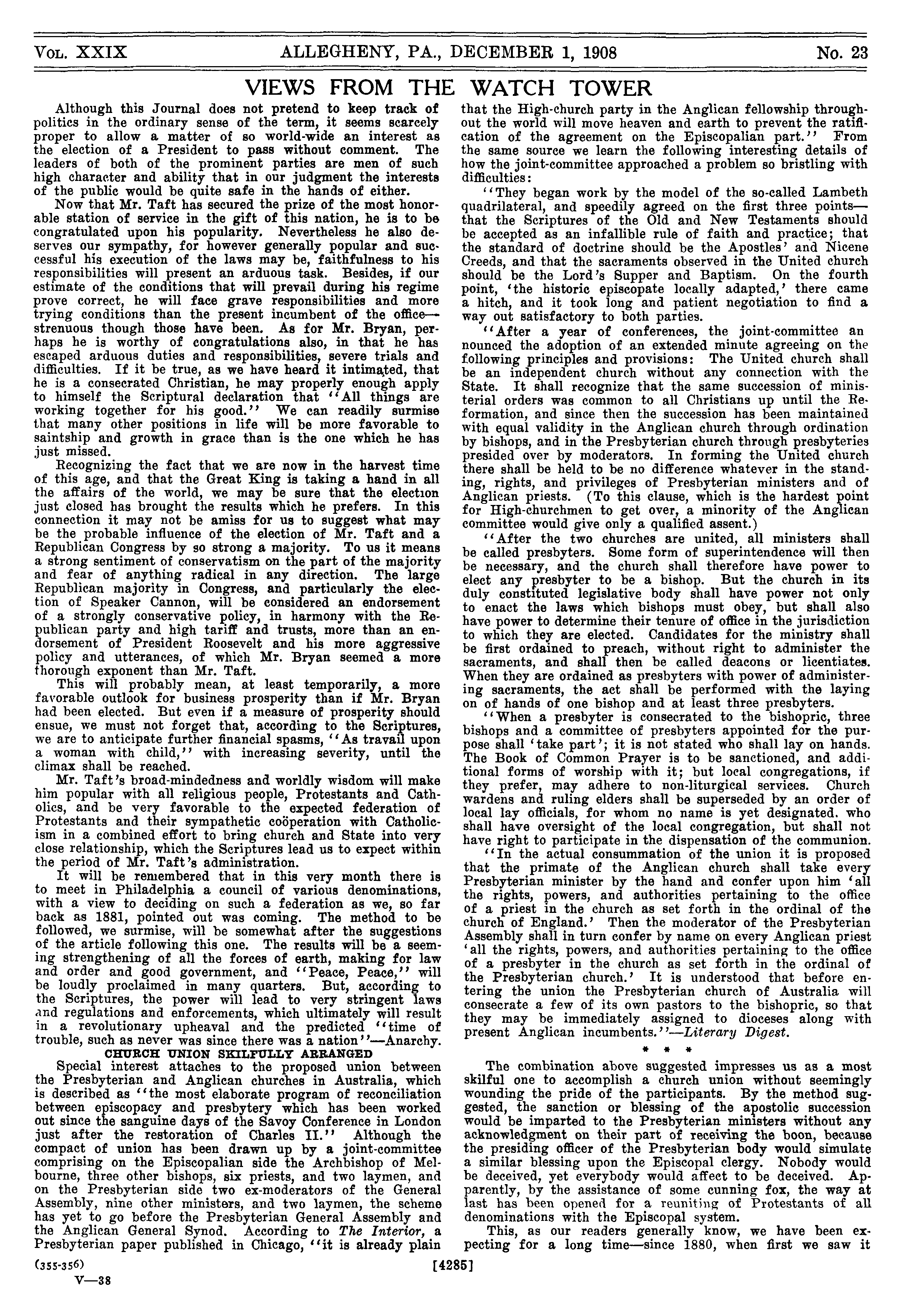
Vou. XXIX ALLEGHENY, PA., DECEMBER 1, 1908 No. 238 VIEWS FROM THE WATCH TOWER Although this Journal does not pretend to keep track of polities in the ordinary sense of the term, it seems scarcely proper to allow a matter of so world-wide an interest as the election of a President to pass without comment. The leaders of both of the prominent parties are men of such high character and ability that in our judgment the interests of the public would be quite safe in the hands of either. Now that Mr. Taft has secured the prize of the most honorable station of service in the gift of this nation, he is to be congratulated upon his popularity. Nevertheless he also deserves our sympathy, for however generally popular and successful his execution of the laws may be, faithfulness to his responsibilities will present an arduous task. Besides, if our estimate of the conditions that will prevail during his regime prove correct, he will face grave responsibilities and more trying conditions than the present incumbent of the office—strenuous though those have been. As for Mr. Bryan, perhaps he is worthy of congratulations also, in that he has escaped arduous duties and responsibilities, severe trials and difficulties. If it be true, as we have heard it intimated, that he is a consecrated Christian, he may properly enough apply to himself the Scriptural declaration that ‘‘ All things are working together for his good.’? We can readily surmise that many other positions in life will be more favorable to saintship and growth in grace than is the one which he has just missed. Recognizing the fact that we are now in the harvest time of this age, and that the Great King is taking a hand in all the affairs of the world, we may be sure that the election just closed has brought the results which he prefers. In this connection it may not be amiss for us to suggest what may be the probable influence of the election of Mr. Taft and a Republican Congress by so strong a majority. To us it means a strong sentiment of conservatism on the part of the majority and fear of anything radical in any direction. The large Republican majority in Congress, and particularly the election of Speaker Cannon, will be considered an endorsement of a strongly conservative policy, in harmony with the Republican party and high tariff and trusts, more than an endorsement of President Roosevelt and his more aggressive policy and utterances, of which Mr. Bryan seemed a more thorough exponent than Mr. Taft. This will probably mean, at least temporarily, a more favorable outlook for business prosperity than if Mr. Bryan had been elected. But even if a measure of prosperity should ensue, we must not forget that, according to the Scriptures, we are to anticipate further financial spasms, ‘‘ As travail upon a woman with child,’’ with increasing severity, until the climax shall be reached. Mr. Taft’s broad-mindedness and worldly wisdom will make him popular with all religious people, Protestants and Catholics, and be very favorable to the expected federation of Protestants and their sympathetic codperation with Catholicism in a combined effort to bring church and State into very close relationship, which the Scriptures lead us to expect within the period of Mr. Taft’s administration. It will be remembered that in this very month there is to meet in Philadelphia a council of various denominations, with a view to deciding on such a federation as we, so far back as 1881, pointed out was coming. The method to be followed, we surmise, will be somewhat after the suggestions of the article following this one. The results will be a seeming strengthening of all the forces of earth, making for law and order and good government, and ‘‘Peace, Peace,’?’ will be loudly proclaimed in many quarters. But, according to the Scriptures, the power will lead to very stringent laws and regulations and enforcements, which ultimately will result in a revolutionary upheaval and the predicted ‘‘time of trouble, such as never was since there was a nation’’—Anarchy. CHURCH UNION SKILFULLY ARRANGED Special interest attaches to the proposed union between the Presbyterian and Anglican churches in Australia, which is described as ‘‘the most elaborate program of reconciliation between episcopacy and presbytery which has been worked out since the sanguine days of the Savoy Conference in London just after the restoration of Charles II.’’ Although the compact of union has been drawn up by a joint-committee comprising on the Episcopalian side the Archbishop of Melbourne, three other bishops, six priests, and two laymen, and on the Presbyterian side two ex-moderators of the General Assembly, nine other ministers, and two laymen, the scheme has yet to go before the Presbyterian General Assembly and the Anglican General Synod. According to The Interior, a Presbyterian paper published in Chicago, ‘‘it is already plain (355-356) V—38 that the High-church party in the Anglican fellowship throughout the world will move heaven and earth to prevent the ratification of the agreement on the Episcopalian part.’’ From the same source we learn the following interesting details of how the joint-committee approached a problem so bristling with difficulties: ‘¢They began work by the model of the so-called Lambeth quadrilateral, and speedily agreed on the first three points— that the Scriptures of the Old and New Testaments should be accepted as an infallible rule of faith and practice; that the standard of doctrine should be the Apostles’ and Nicene Creeds, and that the sacraments observed in the United church should be the Lord’s Supper and Baptism. On the fourth point, ‘the historic episcopate locally adapted,’ there came a hitch, and it took long and patient negotiation to find a way out satisfactory to both parties. ‘¢After a year of conferences, the joint-committee an nounced the adoption of an extended minute agreeing on the following principles and provisions: The United church shall be an independent church without any connection with the State. It shall recognize that the same succession of ministerial orders was common to all Christians up until the Reformation, and since then the succession has been maintained with equal validity in the Anglican church through ordination by bishops, and in the Presbyterian church through presbyteries presided over by moderators. In forming the United church there shall be held to be no difference whatever in the standing, rights, and privileges of Presbyterian ministers and of Anglican priests. (To this clause, which is the hardest point for High-churchmen to get over, a minority of the Anglican committee would give only a qualified assent.) ‘“¢‘After the two churches are united, all ministers shall be called presbyters. Some form of superintendence will then be necessary, and the church shall therefore have power to elect any presbyter to be a bishop. But the church in its duly constituted legislative body shall have power not only to enact the laws which bishops must obey, but shall also have power to determine their tenure of office in the jurisdiction to which they are elected. Candidates for the ministry shall be first ordained to preach, without right to administer the sacraments, and shall then be ealled deacons or licentiates. When they are ordained as presbyters with power of administering sacraments, the act shall be performed with the laying on of hands of one bishop and at least three presbyters. ‘(When a presbyter is consecrated to the bishopric, three bishops and a committee of presbyters appointed for the purpose shall ‘take part’; it is not stated who shall lay on hands. The Book of Common Prayer is to be sanctioned, and additional forms of worship with it; but local congregations, if they prefer, may adhere to non-liturgical services. Church wardens and ruling elders shall be superseded by an order of local lay officials, for whom no name is yet designated. who shall have oversight of the local congregation, but shall not have right to participate in the dispensation of the communion. ‘*In the actual consummation of the union it is proposed that the primate of the Anglican church shall take every Presbyterian minister by the hand and confer upon him ‘all the rights, powers, and authorities pertaining to the office of a priest in the church as set forth in the ordinal of the church of England.’ Then the moderator of the Presbyterian Assembly shall in turn confer by name on every Anglican priest ‘all the rights, powers, and authorities pertaining to the office of a presbyter in the church as set forth in the ordinal of the Presbyterian church.’ It is understood that before entering the union the Presbyterian church of Australia will consecrate a few of its own pastors to the bishopric, so that they may be immediately assigned to dioceses along with present Anglican incumbents.’’—-Literary Digest. * * * The combination above suggested impresses us as a most skilful one to accomplish a church union without seemingly wounding the pride of the participants. By the method suggested, the sanction or blessing of the apostolic succession would be imparted to the Presbyterian ministers without any acknowledgment on their part of receiving the boon, because the presiding officer of the Presbyterian body would simulate a similar blessing upon the Episcopal clergy. Nobody would be deceived, yet everybody would affect to be deceived. Apparently, by the assistance of some cunning fox, the way at jast has been opened for a reuniting of Protestants of all denominations with the Episcopal system. This, as our readers generally know, we have been expecting for a long time—since 1880, when first we saw it [4285]
Pentru a vă îmbunătăți experiența pe site-ul nostru, folosim cookies și tehnologii similare. Unele cookies sunt esențiale pentru funcționalitatea de bază a site-ului nostru și nu pot fi refuzate. Puteți alege să acceptați sau să refuzați cookies suplimentare. Vrem să vă asigurăm că aceste date nu vor fi vândute sau utilizate în scopuri de marketing. Puteți ajusta preferințele dvs. în orice moment accesând Setările de Confidențialitate din subsolul paginii. Pentru mai multe informații, vă rugăm să consultați
Politica de Confidențialitate
Condiții de utilizare
.


